Marie Jaëll: 6 Perspectives on Musical Performance
6 perspectives for a fresh look at your relationship with music
by Federica Righini and Riccardo Zadra
Have you ever overcome a difficulty by looking at it and approaching it from a completely different perspective?
Perhaps you solved a rhythmic problem by releasing your breathing, or found greater authority in your playing through a more stable and natural posture. Or maybe you faced a fear by clarifying your musical intentions more clearly.
Whatever challenges you encounter in performance, it is essential to learn how to broaden both your perspective and your ways of approaching them.
To reflect on these themes, we take inspiration from the work of an extraordinary musician: Marie Jaëll (1846–1925). A French pianist, composer, researcher and writer, Marie Jaëll showed how disciplines apparently far removed from music can offer surprisingly effective tools for understanding musical experience and learning more deeply.
It is striking that her most important book, published in 1896, was titled La Musique et la Psychophysiologie (“Music and Psychophysiology”). An extraordinarily modern intuition, especially considering that neuroscience would emerge many decades later.
Here are six principles freely inspired by her thinking.
- Music corresponds to inner and physiological states
We all know that music can inspire, move, relax or create tension. Less obvious is the fact that your inner state while playing deeply influences both the music itself and the way it is perceived.
It is tiring to listen to a musician who feels uncomfortable while performing: listeners often perceive rigidity, held breathing and uncertainty.
Learning to manage your internal state is therefore essential if you truly want to communicate music.
- Movement and musical feeling are deeply connected
According to Marie Jaëll, there is a close relationship between movement, physical sensations and musical experience.
Tactile and motor sensations become essential reference points for musical expression. But movement alone is not enough: technical practice disconnected from listening and feeling inevitably remains incomplete.
It is easy to associate fear and tension with a difficult passage. For this reason, it can be important to associate practice with sensations of freedom, fluidity and energy as well.
When we observe a great performer, this is often exactly what we perceive: freedom of gesture, naturalness and expressive continuity.
- The way you practise changes the brain
Marie Jaëll was fascinated by the relationship between the brain and movement. Long before modern neuroscience, she intuited that the way we practise and perform does not merely create habits: it literally reshapes the brain.
So when you practise, you are not only learning something. You are also building a particular way of functioning.
“You play the way you are.”
But the perspective could also be reversed:
“You also become the way you train yourself to play.”
- One of the greatest risks is mechanical and unconscious repetition
Marie Jaëll strongly criticised purely automatic practice.
By “unconscious”, she meant a state in which awareness of physical sensations, listening and emotions becomes blurred or almost absent.
It is very easy to practise by repeating mechanically, without truly listening to what is happening in the body, in the sound and in attention itself.
The poorer perception becomes, the more movement tends to stiffen and lose vitality.
- A good performance arises from inner anticipation
Marie Jaëll challenged the idea that one first learns the notes and only later “adds” expression.
For her, an effective performance arises from the ability to anticipate inwardly both the sound and the gesture.
This means developing a clear mental image of sound quality, phrasing, musical intention and the motor sensations needed to realise them.
The opposite of mechanical practice is precisely this: practising while keeping intention alive.
- Music, body, thought and expression form a unity
In Marie Jaëll’s thinking, sound, movement, perception, thought and expression are not separate elements, but different aspects of the same experience.
For this reason, a technical difficulty can be approached from many different perspectives:
- clarifying musical intentions;
• improving the quality of listening;
• expanding body awareness;
• working on attention;
• transforming the relationship with anxiety and tension;
• changing limiting beliefs.
The more perspectives and strategies you develop, the greater the possibilities for artistic growth become.
To learn more about the life and works of Marie Jaëll:
https://www.mariejaell.org/wordpress/en/
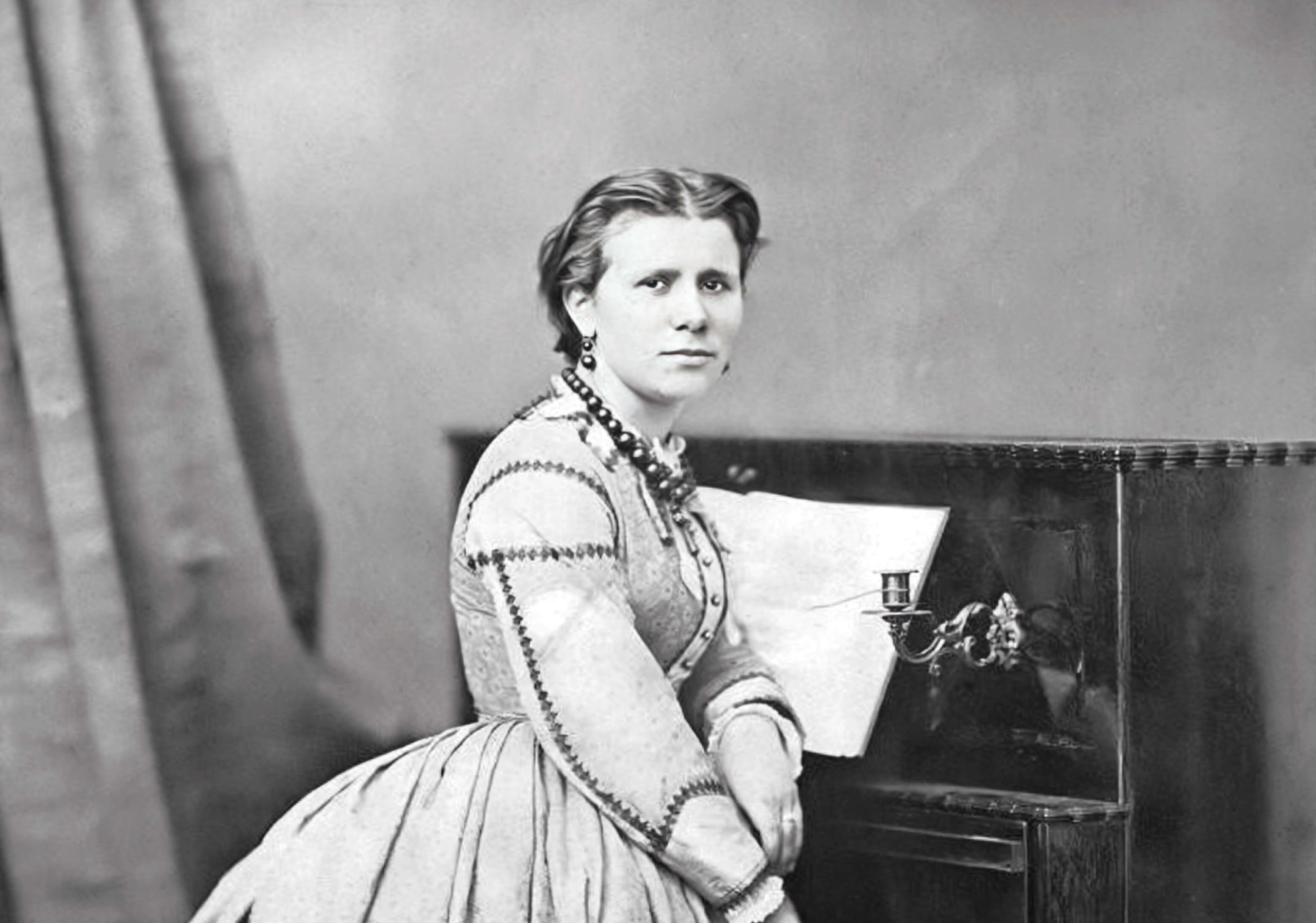
Marie Jaëll (1846–1925)